Buy myls.eu ?
We are moving the project
myls.eu .
Are you interested in purchasing the domain
myls.eu ?
domain@kv-gmbh.de · 0541-91531010
Buy myls.eu ?
Can you prove specific integration rules?
Yes, specific integration rules can be proven using techniques such as substitution, integration by parts, or trigonometric identities. By applying these methods and carefully manipulating the integrals, one can derive the desired integration rules. These proofs often involve breaking down the integral into simpler components and then using known mathematical properties to arrive at the final result. **
Can you prove certain integration rules?
Yes, integration rules can be proven using techniques from calculus, such as the fundamental theorem of calculus, substitution, integration by parts, and trigonometric identities. By applying these techniques and following the steps of the proofs, one can demonstrate the validity of integration rules. Additionally, mathematical software can be used to verify the results of integration rules by computing integrals and comparing them to known solutions. **

Similar search terms for Rules
Top-Angebote
Products related to Rules:
-
Laural Home Lake Rules ComforterWarm up on chilly nights with this Laural Home Lake Rules Comforter. This comforter is made of cotton and is available in twin, queen or king. It has a blue, brown, red, and white color scheme with a reversible color side.162,96 $*Shipping: 0,00 $Secure redirect to the provider



-
What are integration rules in mathematics?
Integration rules in mathematics are a set of formulas and techniques used to find the integral of a function. These rules include the power rule, which states that the integral of x^n is (1/(n+1))x^(n+1), and the constant multiple rule, which allows constants to be factored out of the integral. Other important integration rules include the sum and difference rules, the substitution rule, and the integration by parts rule. These rules are essential for solving definite and indefinite integrals and are fundamental in calculus. **
-
What is your question about the integration rules?
My question about the integration rules is how to effectively apply them to different types of functions. I want to understand when to use the power rule, the substitution rule, the integration by parts rule, and other integration techniques. Additionally, I am interested in knowing how to recognize which rule to use for a given function and how to apply it correctly to find the integral. **
-
Can economic efficiency and productivity develop mutually?
Yes, economic efficiency and productivity can develop mutually. When businesses and industries become more efficient in their operations, they can produce more output with the same amount of input, leading to increased productivity. Similarly, when productivity increases, it can drive economic efficiency by reducing waste and improving resource allocation. Therefore, as businesses and industries focus on improving efficiency and productivity, they can reinforce and support each other's development. **
-
Which rules?
The rules that govern our behavior, interactions, and decisions in various aspects of life. These rules can be societal norms, laws, regulations, or guidelines set by organizations or institutions. Adhering to these rules helps maintain order, promote fairness, and ensure the well-being of individuals and society as a whole. It is important to understand and follow these rules to contribute positively to our communities and environments. **


What is the difference between efficiency and productivity?
Efficiency refers to how well resources are utilized to achieve a specific goal or output, while productivity measures the output or results generated from a specific amount of input or resources. Efficiency focuses on minimizing waste and maximizing output with the resources available, while productivity is a measure of how much output is produced relative to the input used. In essence, efficiency is about doing things right, while productivity is about doing the right things. **
Does increasing productivity lead to higher economic efficiency?
Yes, increasing productivity can lead to higher economic efficiency. When a company or economy can produce more output with the same input of resources, it can lead to lower production costs and higher profits. This can also lead to lower prices for consumers, which can increase overall economic welfare. Additionally, higher productivity can lead to increased competitiveness in the global market, which can further contribute to economic efficiency. **
Top-Angebote
Products related to Rules:
-
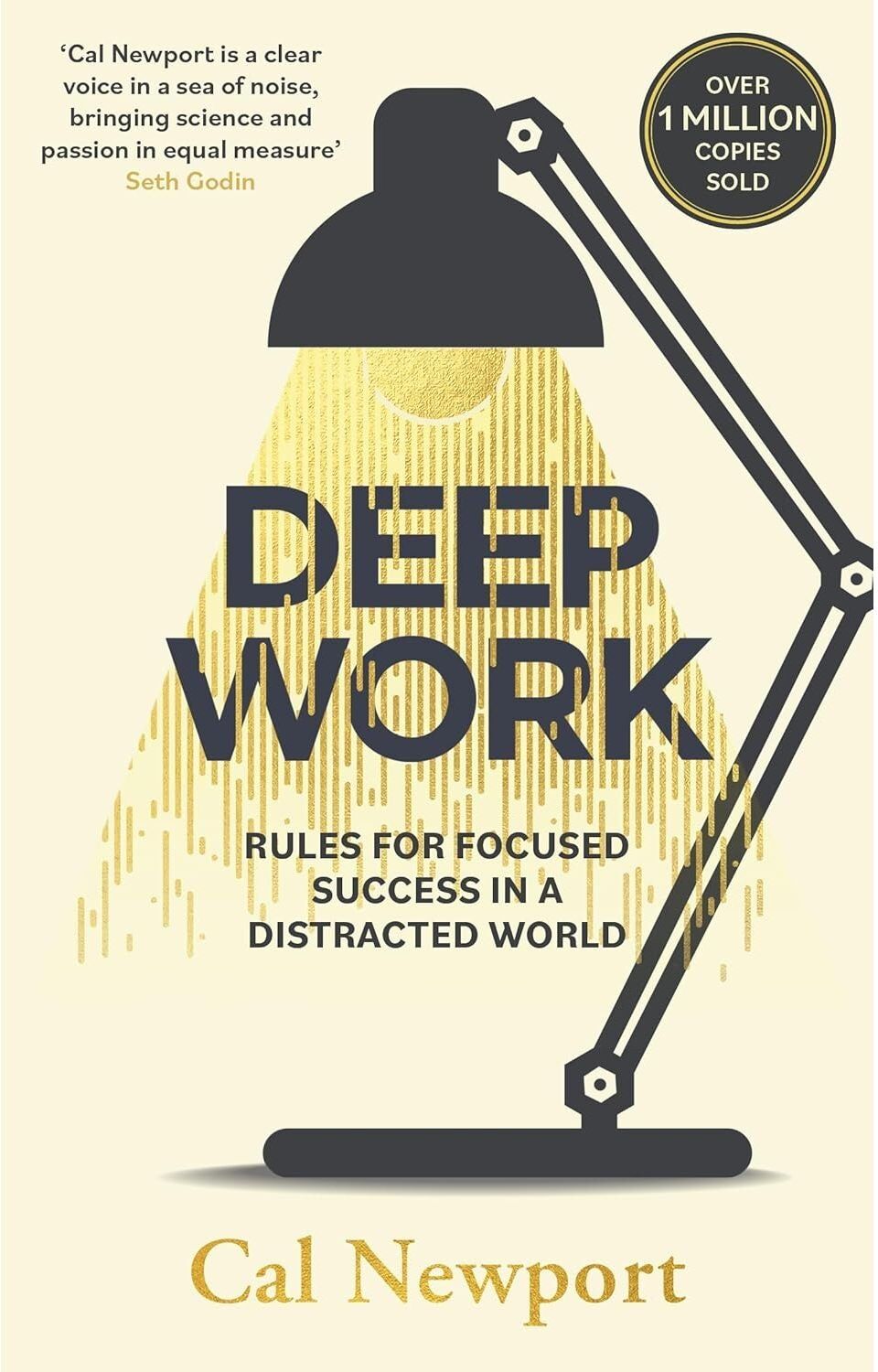
Piatkus Deep Work – Rules for Focused Success in a Distracted World by Cal Newport Productivity, Focus & Career Success BookIn a world full of distractions, the ability to focus deeply is becoming increasingly rare—and increasingly valuable. In Deep Work: Rules for Focused Success in a Distracted World, bestselling author and productivity expert Cal Newport explains why deep, concentrated work is the key to mastering complex skills, producing high-quality results, and standing out in your career. Drawing on neuroscience, psychology, and real-world examples, Newport shows how to eliminate distractions, train your focus, and work with intense concentration. The book combines compelling theory with practical strategies, helping readers build habits that support sustained attention and meaningful productivity in both professional and personal life. What You’ll Learn: Why deep work is essential for success in the modern economy How shallow work undermines productivity and focus Practical rules for building deep work habits Techniques to minimize distractions and digital overload How to produce better results in less time Perfect for professionals, students, creatives, and entrepreneurs, Deep Work is a must-read guide to achieving focus, efficiency, and long-term career success.7,99 £*Shipping: 2,99 £Secure redirect to the provider
-
Laural Home Lake Rules ComforterWarm up on chilly nights with this Laural Home Lake Rules Comforter. This comforter is made of cotton and is available in twin, queen or king. It has a blue, brown, red, and white color scheme with a reversible color side.162,96 $*Shipping: 0,00 $Secure redirect to the provider
-
Can you prove specific integration rules?
Yes, specific integration rules can be proven using techniques such as substitution, integration by parts, or trigonometric identities. By applying these methods and carefully manipulating the integrals, one can derive the desired integration rules. These proofs often involve breaking down the integral into simpler components and then using known mathematical properties to arrive at the final result. **
-
Can you prove certain integration rules?
Yes, integration rules can be proven using techniques from calculus, such as the fundamental theorem of calculus, substitution, integration by parts, and trigonometric identities. By applying these techniques and following the steps of the proofs, one can demonstrate the validity of integration rules. Additionally, mathematical software can be used to verify the results of integration rules by computing integrals and comparing them to known solutions. **
-
What are integration rules in mathematics?
Integration rules in mathematics are a set of formulas and techniques used to find the integral of a function. These rules include the power rule, which states that the integral of x^n is (1/(n+1))x^(n+1), and the constant multiple rule, which allows constants to be factored out of the integral. Other important integration rules include the sum and difference rules, the substitution rule, and the integration by parts rule. These rules are essential for solving definite and indefinite integrals and are fundamental in calculus. **
-
What is your question about the integration rules?
My question about the integration rules is how to effectively apply them to different types of functions. I want to understand when to use the power rule, the substitution rule, the integration by parts rule, and other integration techniques. Additionally, I am interested in knowing how to recognize which rule to use for a given function and how to apply it correctly to find the integral. **
Similar search terms for Rules
-
Laural Home Lake Rules ComforterWarm up on chilly nights with this Laural Home Lake Rules Comforter. This comforter is made of cotton and is available in twin, queen or king. It has a blue, brown, red, and white color scheme with a reversible color side.127,74 $*Shipping: 0,00 $Secure redirect to the provider
-
Can economic efficiency and productivity develop mutually?
Yes, economic efficiency and productivity can develop mutually. When businesses and industries become more efficient in their operations, they can produce more output with the same amount of input, leading to increased productivity. Similarly, when productivity increases, it can drive economic efficiency by reducing waste and improving resource allocation. Therefore, as businesses and industries focus on improving efficiency and productivity, they can reinforce and support each other's development. **
-
Which rules?
The rules that govern our behavior, interactions, and decisions in various aspects of life. These rules can be societal norms, laws, regulations, or guidelines set by organizations or institutions. Adhering to these rules helps maintain order, promote fairness, and ensure the well-being of individuals and society as a whole. It is important to understand and follow these rules to contribute positively to our communities and environments. **
-
What is the difference between efficiency and productivity?
Efficiency refers to how well resources are utilized to achieve a specific goal or output, while productivity measures the output or results generated from a specific amount of input or resources. Efficiency focuses on minimizing waste and maximizing output with the resources available, while productivity is a measure of how much output is produced relative to the input used. In essence, efficiency is about doing things right, while productivity is about doing the right things. **
-
Does increasing productivity lead to higher economic efficiency?
Yes, increasing productivity can lead to higher economic efficiency. When a company or economy can produce more output with the same input of resources, it can lead to lower production costs and higher profits. This can also lead to lower prices for consumers, which can increase overall economic welfare. Additionally, higher productivity can lead to increased competitiveness in the global market, which can further contribute to economic efficiency. **
* All prices are inclusive of VAT and, if applicable, plus shipping costs. The offer information is based on the details provided by the respective shop and is updated through automated processes. Real-time updates do not occur, so deviations can occur in individual cases. ** Note: Parts of this content were created by AI.