Buy myls.eu ?
We are moving the project
myls.eu .
Are you interested in purchasing the domain
myls.eu ?
domain@kv-gmbh.de · 0541-91531010
Buy myls.eu ?
What is the braking deceleration?
Braking deceleration refers to the rate at which a vehicle slows down when the brakes are applied. It is measured in meters per second squared (m/s^2) and represents the negative acceleration experienced by the vehicle as it comes to a stop. The braking deceleration depends on factors such as the vehicle's mass, the friction between the tires and the road, and the force applied to the brakes. A higher braking deceleration means the vehicle will come to a stop more quickly. **
How do I calculate the deceleration?
To calculate deceleration, you need to determine the change in velocity and the time it takes for that change to occur. Deceleration is calculated by dividing the change in velocity by the time taken for the change to happen. The formula for deceleration is: deceleration = (final velocity - initial velocity) / time. Make sure to use consistent units for velocity and time in your calculation. **

Similar search terms for Deceleration
Top-Angebote
Products related to Deceleration:
-
AMX MU-3300 MUSE Automation Controller, 8 Serial (AMX-CCC033)The AMX MU-3300 MUSE Automation Controller is a powerful, secure, and reliable device that provides a dedicated computing resource running HARMAN Professional's AMX MUSE automation platform. The MU-3300 can simultaneously process a virtually unlimited number of scripts written in JavaScript, Python, or Groovy and natively supports Low-Code development with Node-RED. SpecificationsCountry of Origin: MexicoWeight: 8.3 lbs2418,49 £*Shipping: 0,00 £Secure redirect to the provider
-
DEVERA Hanger and Full-length Mirror IntegrationSpecification Main Material: Rubber Wood,Solid Wood,Wood+Glass Product Style: American Design,Art Deco,Artsy,Contemporary,European Product Features Product Information: Full-length mirror, solid wood + rubber wood + glass, 65.7*17.7in (mirror width:…302,39 $*Shipping: 0,00 $Secure redirect to the provider
-
Uplift Essentials Armband Heart Rate Monitor With Bluetooth 5.0 And ANT+ Connectivity Armband Heart Rate Monitor With Bluetooth 5.0 And ANT+ ConnectivityTrain smarter and safer with this armband heart rate monitor featuring accurate optical HR tracking, calorie burn monitoring, and heart rate zone feedback. Designed for fitness enthusiasts, cyclists, and athletes, this device connects seamlessly to...126,97 $*Shipping: 0,00 $Secure redirect to the provider
-
Bosch Smart Home Universal Switch Flex White Matt Slim Automation SwitchDescription Control your smart home devices with ease using the Bosch Smart Home Universal Switch Flex in White Matt. Designed for convenient automation and flexible placement, this slim wireless switch allows you to control connected Bosch Smart Home devices with a simple press. Featuring a modern raised slim profile and screwless design, the Universal Switch Flex blends seamlessly into any home interior. With wireless communication technology and low power consumption, it provides a reliable and practical solution for smart home control without the need for complex wiring. Ideal for lighting control, automation routines, and smart home scenarios, the Bosch Smart Home Universal Switch Flex offers a simple way to make everyday tasks more convenient.40,99 £*Shipping: 0,00 £Secure redirect to the provider




-
How do you calculate the braking deceleration?
To calculate the braking deceleration, you need to know the initial velocity of the object, the final velocity (usually 0 if the object comes to a stop), and the time it takes for the object to come to a stop. The formula to calculate deceleration is: deceleration = (final velocity - initial velocity) / time. By plugging in the values for final velocity, initial velocity, and time into this formula, you can calculate the braking deceleration of the object. **
-
How does uniform deceleration work in physics?
Uniform deceleration in physics refers to a constant decrease in velocity over time. This means that the object is slowing down at a consistent rate. The rate of deceleration is measured in terms of acceleration, with a negative sign to indicate that it is in the opposite direction of the initial velocity. This can be represented by the equation a = (vf - vi) / t, where a is the acceleration, vf is the final velocity, vi is the initial velocity, and t is the time taken. Uniform deceleration is important in understanding the motion of objects and can be used to calculate stopping distances and braking forces in real-world scenarios. **
-
Friction on an inclined plane causes deceleration.
Friction on an inclined plane causes deceleration because it acts in the opposite direction of the object's motion. As the object moves up or down the incline, the friction force opposes its movement, reducing its speed. This deceleration is due to the friction force converting the object's kinetic energy into heat. The steeper the incline or the greater the coefficient of friction, the stronger the deceleration will be. **
-
What is the deceleration of the brakes 2?
The deceleration of brakes 2 is 5 m/s^2. This means that the brakes are slowing down the car at a rate of 5 meters per second squared. A higher deceleration value indicates a stronger braking force, which can help the car come to a stop more quickly. It is important for drivers to be aware of the deceleration of their brakes to ensure safe and efficient stopping. **


How do you calculate the braking deceleration 2?
To calculate the braking deceleration 2, you can use the formula: a = (v_f - v_i) / t, where a is the deceleration, v_f is the final velocity, v_i is the initial velocity, and t is the time taken to decelerate. First, determine the initial and final velocities of the object. Then, measure the time it takes for the object to come to a complete stop. Finally, plug these values into the formula to calculate the braking deceleration 2. **
What is the formula for deceleration in physics?
The formula for deceleration in physics is given by the equation: a = (v - u) / t, where a is the deceleration, v is the final velocity, u is the initial velocity, and t is the time taken. This formula calculates the rate at which an object slows down, or decelerates, over a certain period of time. Deceleration is a negative acceleration, so the value obtained from the formula will be negative, indicating a decrease in velocity. **
Top-Angebote
Products related to Deceleration:
-
Ring Battery Video Doorbell Pro – Advanced Home Security & Connectivity, NewUpgrade your home security with the Ring Battery Video Doorbell Pro – Wireless Video Doorbell Security Camera . Designed to give you peace of mind, it delivers a head-to-toe 1536p HD view so you can see every detail clearly, from visitors to parcels at your doorstep. With advanced 3D Motion Detection and Bird’s Eye View , you’ll always know what’s happening around your home. The built-in colour night vision ensures crisp images even in the dark, while the wire-free battery design makes installation simple and flexible. Stay connected anywhere with instant notifications, two-way talk, and full integration with the Ring app, Alexa devices, and more. ✔️ Wireless video doorbell – Easy to install with a rechargeable battery, no wiring needed ✔️ 1536p HD head-to-toe view – See visitors and packages clearly in high definition ✔️ 3D Motion Detection & Bird’s Eye View – Advanced alerts and aerial perspective for extra security ✔️ Colour night vision – Crystal-clear video even in low light or darkness ✔️ Two-way talk with noise cancellation – Hear and speak to visitors in real time ✔️ Customisable motion zones – Focus on the areas that matter most ✔️ Smart alerts & notifications – Instant updates on your phone via the Ring app ✔️ Alexa compatible – Works seamlessly with Echo devices for hands-free monitoring ✔️ Quick-release battery pack – Easy to recharge and swap for uninterrupted security ✔️ Durable design – Built to withstand outdoor weather conditions The Ring Battery Video Doorbell Pro combines advanced motion detection, high-definition video, and smart home integration in one sleek device. Perfect for enhancing your home security, it ensures you never miss a visitor or delivery, day or night.174,49 £*Shipping: 0,00 £Secure redirect to the provider
-
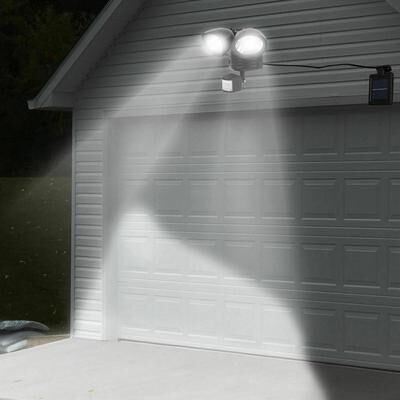
All Categories Goods LED Solar Security Light Dual Motion Sensor Outdoor Floodlight With LED Technology For Energy Efficient Illumination LED Solar Security Light Dual Motion Sensor Outdoor Floodlight With LED Technology For Energy Efficient IlluminationBrighten your outdoor space with the 1 pcs of 22 LED Solar Security Light, designed for maximum visibility and security. Powered by ecofriendly solar energy, this motion sensor floodlight activates when movement is detected, offering both...63,97 $*Shipping: 0,00 $Secure redirect to the provider
-
AMX MU-3300 MUSE Automation Controller, 8 Serial (AMX-CCC033)The AMX MU-3300 MUSE Automation Controller is a powerful, secure, and reliable device that provides a dedicated computing resource running HARMAN Professional's AMX MUSE automation platform. The MU-3300 can simultaneously process a virtually unlimited number of scripts written in JavaScript, Python, or Groovy and natively supports Low-Code development with Node-RED. SpecificationsCountry of Origin: MexicoWeight: 8.3 lbs2418,49 £*Shipping: 0,00 £Secure redirect to the provider
-
DEVERA Hanger and Full-length Mirror IntegrationSpecification Main Material: Rubber Wood,Solid Wood,Wood+Glass Product Style: American Design,Art Deco,Artsy,Contemporary,European Product Features Product Information: Full-length mirror, solid wood + rubber wood + glass, 65.7*17.7in (mirror width:…302,39 $*Shipping: 0,00 $Secure redirect to the provider
-
What is the braking deceleration?
Braking deceleration refers to the rate at which a vehicle slows down when the brakes are applied. It is measured in meters per second squared (m/s^2) and represents the negative acceleration experienced by the vehicle as it comes to a stop. The braking deceleration depends on factors such as the vehicle's mass, the friction between the tires and the road, and the force applied to the brakes. A higher braking deceleration means the vehicle will come to a stop more quickly. **
-
How do I calculate the deceleration?
To calculate deceleration, you need to determine the change in velocity and the time it takes for that change to occur. Deceleration is calculated by dividing the change in velocity by the time taken for the change to happen. The formula for deceleration is: deceleration = (final velocity - initial velocity) / time. Make sure to use consistent units for velocity and time in your calculation. **
-
How do you calculate the braking deceleration?
To calculate the braking deceleration, you need to know the initial velocity of the object, the final velocity (usually 0 if the object comes to a stop), and the time it takes for the object to come to a stop. The formula to calculate deceleration is: deceleration = (final velocity - initial velocity) / time. By plugging in the values for final velocity, initial velocity, and time into this formula, you can calculate the braking deceleration of the object. **
-
How does uniform deceleration work in physics?
Uniform deceleration in physics refers to a constant decrease in velocity over time. This means that the object is slowing down at a consistent rate. The rate of deceleration is measured in terms of acceleration, with a negative sign to indicate that it is in the opposite direction of the initial velocity. This can be represented by the equation a = (vf - vi) / t, where a is the acceleration, vf is the final velocity, vi is the initial velocity, and t is the time taken. Uniform deceleration is important in understanding the motion of objects and can be used to calculate stopping distances and braking forces in real-world scenarios. **
Similar search terms for Deceleration
-
Uplift Essentials Armband Heart Rate Monitor With Bluetooth 5.0 And ANT+ Connectivity Armband Heart Rate Monitor With Bluetooth 5.0 And ANT+ ConnectivityTrain smarter and safer with this armband heart rate monitor featuring accurate optical HR tracking, calorie burn monitoring, and heart rate zone feedback. Designed for fitness enthusiasts, cyclists, and athletes, this device connects seamlessly to...126,97 $*Shipping: 0,00 $Secure redirect to the provider
-
Bosch Smart Home Universal Switch Flex White Matt Slim Automation SwitchDescription Control your smart home devices with ease using the Bosch Smart Home Universal Switch Flex in White Matt. Designed for convenient automation and flexible placement, this slim wireless switch allows you to control connected Bosch Smart Home devices with a simple press. Featuring a modern raised slim profile and screwless design, the Universal Switch Flex blends seamlessly into any home interior. With wireless communication technology and low power consumption, it provides a reliable and practical solution for smart home control without the need for complex wiring. Ideal for lighting control, automation routines, and smart home scenarios, the Bosch Smart Home Universal Switch Flex offers a simple way to make everyday tasks more convenient.40,99 £*Shipping: 0,00 £Secure redirect to the provider
-
HARPERCOLLINS Creative Confidence by Tom & David Kelley – Unleashing Your Creative Potential & Innovation MindsetA powerful and inspiring book from the founders of IDEO, the award-winning design firm, on unleashing the creativity that lies within each and every one of us. Too often, companies and individuals assume that creativity and innovation are the domain of the ‘creative types’. But two of the foremost experts in innovation, design and creativity on the planet show us that each and every one of us is creative. In an entertaining and inspiring narrative that draws on countless stories from their work at IDEO, and with many of the world's top companies and design firms, David and Tom Kelley identify the principles and strategies that will allow us to tap into our creative potential in our work lives, and in our personal lives, allow us to think outside the box in terms of how we approach and solve problems. ‘Creative Confidence’ is a book that will help each of us be more productive and successful in our lives and in our careers.4,95 £*Shipping: 1,99 £Secure redirect to the provider
-
Uplift Essentials Triple Safety AirTag Integration Collar purpleKeep your pet protected with the ultimate hightech security accessory: the TripleSafety AirTag Integration Collar. This isn't just a stylish neckband; its a comprehensive tracking and identification system designed to give you total peace of mind....56,97 $*Shipping: 0,00 $Secure redirect to the provider
-
Friction on an inclined plane causes deceleration.
Friction on an inclined plane causes deceleration because it acts in the opposite direction of the object's motion. As the object moves up or down the incline, the friction force opposes its movement, reducing its speed. This deceleration is due to the friction force converting the object's kinetic energy into heat. The steeper the incline or the greater the coefficient of friction, the stronger the deceleration will be. **
-
What is the deceleration of the brakes 2?
The deceleration of brakes 2 is 5 m/s^2. This means that the brakes are slowing down the car at a rate of 5 meters per second squared. A higher deceleration value indicates a stronger braking force, which can help the car come to a stop more quickly. It is important for drivers to be aware of the deceleration of their brakes to ensure safe and efficient stopping. **
-
How do you calculate the braking deceleration 2?
To calculate the braking deceleration 2, you can use the formula: a = (v_f - v_i) / t, where a is the deceleration, v_f is the final velocity, v_i is the initial velocity, and t is the time taken to decelerate. First, determine the initial and final velocities of the object. Then, measure the time it takes for the object to come to a complete stop. Finally, plug these values into the formula to calculate the braking deceleration 2. **
-
What is the formula for deceleration in physics?
The formula for deceleration in physics is given by the equation: a = (v - u) / t, where a is the deceleration, v is the final velocity, u is the initial velocity, and t is the time taken. This formula calculates the rate at which an object slows down, or decelerates, over a certain period of time. Deceleration is a negative acceleration, so the value obtained from the formula will be negative, indicating a decrease in velocity. **
* All prices are inclusive of VAT and, if applicable, plus shipping costs. The offer information is based on the details provided by the respective shop and is updated through automated processes. Real-time updates do not occur, so deviations can occur in individual cases. ** Note: Parts of this content were created by AI.