Buy myls.eu ?
We are moving the project
myls.eu .
Are you interested in purchasing the domain
myls.eu ?
domain@kv-gmbh.de · 0541-91531010
Buy myls.eu ?
Can economic efficiency and productivity develop mutually?
Yes, economic efficiency and productivity can develop mutually. When businesses and industries become more efficient in their operations, they can produce more output with the same amount of input, leading to increased productivity. Similarly, when productivity increases, it can drive economic efficiency by reducing waste and improving resource allocation. Therefore, as businesses and industries focus on improving efficiency and productivity, they can reinforce and support each other's development. **
What is the difference between efficiency and productivity?
Efficiency refers to how well resources are utilized to achieve a specific goal or output, while productivity measures the output or results generated from a specific amount of input or resources. Efficiency focuses on minimizing waste and maximizing output with the resources available, while productivity is a measure of how much output is produced relative to the input used. In essence, efficiency is about doing things right, while productivity is about doing the right things. **

Similar search terms for HARPERCOLLINS-Time-Travelling-with
Top-Angebote
Products related to HARPERCOLLINS-Time-Travelling-with:
-
Time Travelling Series By Ross Welford 3 Books Collection Set - Ages 9+ - Paperback HarperCollins PublishersTitles in this set: 1. Time Travelling with a Hamster (Time Travelling Series) 2. Time Travelling with a Tortoise (Time Travelling Series) 3. The Monkey Who Fell From The Future Description: Time Travelling with a Hamster A story that crosses time and generations, for adventure-loving readers young and old. “My dad died twice. Once when he was thirty nine and again four years later when he was twelve.” On Al Chaudhury’s twelfth birthday his beloved Grandpa Byron gives him a letter from Al’s late father. In it Al receives a mission: travel back to 1984 in a secret time machine and save his father’s life. Al soon discovers that time travel requires daring and imagination. It also requires lies, theft, setting his school on fire and ignoring philosophical advice from Grandpa Byron. All without losing his pet hamster, Alan Shearer… Time Travelling With a Hamster is a funny, heart-warming race-against-time – and across generations – adventure that you will won’t be able to put down. Time Travelling with a Tortoise Al Chaudhury travelled back in time to save his father’s life. And it worked – Al’s dad is alive again and life is back to the way it should be. At least, that’s what Al thinks. But when an accident robs Al’s beloved Grandpa Byron of his world-beating memory, Al is forced back in time again, this time leaving someone behind, trapped in a prehistoric dimension. Al is forced into a rescue mission to recover his friend from the past… and to make sure that there will be a future waiting for them all. It turns out time travel is far more complicated than Al thought. The Monkey Who Fell From The Future The year is 2425. Centuries after a catastrophic meteor collision, nature has retaken the earth. In a small town in what was once England, young Ocean Mooney and the monkey-owning Duke Smiff have just dug up a 400 year-old tablet computer. Meanwhile, in the present day, Thomas Reeve and his genius cousin Kylie create the Time Tablet – a device which they hope will allow them to communicate with the future. But when the Time Tablet malfunctions live on television, Thomas and Kylie are sucked into the year 2425 – and have only 24 hours to return home, and save the future of humanity…14,49 £*Shipping: 2,99 £Secure redirect to the provider
-
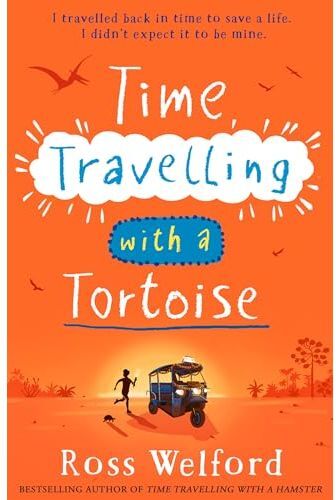
HARPERCOLLINS Time Travelling with a Tortoise: New for 2024, a thrilling time-travel adventure perfect for children aged 9+. A Sunday Times Book of the WeekExciting, funny, heartwarming, and mind-bendingly clever, Time Travelling with a Tortoise is the extraordinary, adventure-packed sequel to Ross Welford’s beloved, bestselling debut, Time Travelling with a Hamster. Al Chaudhury travelled back in time to save his father’s life. And it worked – Al’s dad is alive again and life is back to the way it should be. At least, that’s what Al thinks. But when an accident robs Al’s beloved Grandpa Byron of his world-beating memory, Al is forced back in time again, this time leaving someone behind, trapped in a prehistoric dimension. Al is forced into a rescue mission to recover his friend from the past… and to make sure that there will be a future waiting for them all. It turns out time travel is far more complicated than Al thought. ‘Ingeniously plotted … An adventure with humour, well-observed family life, improbable friendships and a warm heart’ Sunday Times ‘An action-packed adventure’ Daily Mail6,99 £*Shipping: 2,99 £Secure redirect to the provider



-
Does increasing productivity lead to higher economic efficiency?
Yes, increasing productivity can lead to higher economic efficiency. When a company or economy can produce more output with the same input of resources, it can lead to lower production costs and higher profits. This can also lead to lower prices for consumers, which can increase overall economic welfare. Additionally, higher productivity can lead to increased competitiveness in the global market, which can further contribute to economic efficiency. **
-
What are the connections between efficiency and productivity?
Efficiency and productivity are closely connected in that efficiency refers to the ability to accomplish a task with minimal waste, effort, or cost, while productivity refers to the rate at which goods or services are produced. When a process or system is efficient, it can lead to increased productivity because it allows for more output to be generated with the same amount of input. Conversely, when productivity is high, it often indicates that the resources and processes are being used efficiently. Therefore, improving efficiency can lead to increased productivity, and vice versa, as they both contribute to the overall effectiveness of a business or organization. **
-
What is the difference between productivity, efficiency, and profitability?
Productivity refers to the amount of output produced per unit of input, such as time or resources. Efficiency, on the other hand, focuses on how well resources are used to achieve a specific goal or output. Profitability, meanwhile, is a measure of how efficiently a company generates profit relative to its costs and expenses. In essence, productivity is about output per input, efficiency is about resource utilization, and profitability is about the bottom line of a business. **
-
What is the relationship between productivity and economic efficiency?
Productivity and economic efficiency are closely related concepts. Productivity refers to the amount of output produced per unit of input, such as labor or capital. When productivity increases, more output is produced with the same amount of input, leading to greater economic efficiency. Economic efficiency, on the other hand, refers to the optimal allocation of resources to maximize output and minimize waste. Therefore, higher productivity often leads to greater economic efficiency as resources are used more effectively to produce goods and services. Conversely, lower productivity can lead to inefficiencies in resource allocation and reduced overall economic efficiency. **


How do profitability, productivity, and efficiency differ from each other?
Profitability refers to the ability of a company to generate profit, which is the difference between revenue and expenses. Productivity measures the output of goods or services produced per unit of input, such as labor or capital. Efficiency, on the other hand, focuses on how well resources are utilized to achieve a specific goal, often measured by the ratio of input to output. In summary, profitability is about generating profit, productivity is about output per input, and efficiency is about maximizing output with the resources available. **
How does the security barrier in the store with alarm and security technology work?
The security barrier in a store with alarm and security technology typically consists of sensors placed at entry and exit points. These sensors detect when an item with a security tag passes through them without being deactivated at the checkout. When this happens, the sensors trigger an alarm to alert store staff of a potential theft. Additionally, the security tags on items are usually deactivated at the checkout counter using a special device, allowing customers to leave the store without setting off the alarm. **
Top-Angebote
Products related to HARPERCOLLINS-Time-Travelling-with:
-
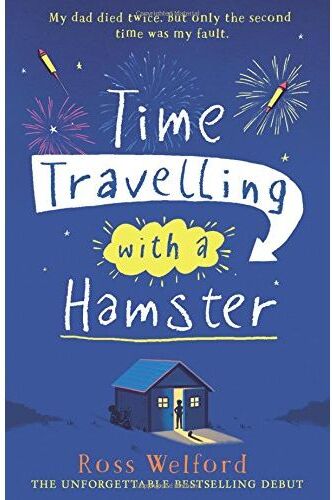
HARPERCOLLINS Time Travelling with a HamsterFor readers who loved Wonder and The Curious Incident of the Dog in the Night-Time this extraordinary debut will make you laugh and cry. A story that crosses time and generations, for adventure-loving readers young and old. “My dad died twice. Once when he was thirty nine and again four years later when he was twelve.” On Al Chaudhury’s twelfth birthday his beloved Grandpa Byron gives him a letter from Al’s late father. In it Al receives a mission: travel back to 1984 in a secret time machine and save his father’s life. Al soon discovers that time travel requires daring and imagination. It also requires lies, theft, setting his school on fire and ignoring philosophical advice from Grandpa Byron. All without losing his pet hamster, Alan Shearer… Time Travelling With a Hamster is a funny, heart-warming race-against-time – and across generations – adventure that you will won’t be able to put down.7,99 £*Shipping: 2,99 £Secure redirect to the provider
-
HARPERCOLLINS Ross Welford Collection 3 Books Set (Time Travelling with a Hamster, The Monkey Who Fell From The Future & Time Travelling with a Tortoise)Ross Welford Collection 3 Books Set (Time Travelling with a Hamster, The Monkey Who Fell From The Future & Time Travelling with a Tortoise):Time Travelling with a Hamster:A story that crosses time and generations, for adventure-loving readers young and old.“My dad died twice. Once when he was thirty nine and again four years later when he was twelve.”On Al Chaudhury’s twelfth birthday his beloved Grandpa Byron gives him a letter from Al’s late father. In it Al receives a mission: travel back to 1984 in a secret time machine and save his father’s life.Al soon discovers that time travel requires daring and imagination. It also requires lies, theft, setting his school on fire and ignoring philosophical advice from Grandpa Byron. All without losing his pet hamster, Alan Shearer…The Monkey Who Fell From The Future:The year is 2425. Centuries after a catastrophic meteor collision, nature has retaken the earth. In a small town in what was once England, young Ocean Mooney and the monkey-owning Duke Smiff have just dug up a 400 year-old tablet computer.Meanwhile, in the present day, Thomas Reeve and his genius cousin Kylie create the Time Tablet – a device which they hope will allow them to communicate with the future.Time Travelling with a Tortoise:Al Chaudhury travelled back in time to save his father’s life.And it worked – Al’s dad is alive again and life is back to the way it should be. At least, that’s what Al thinks.But when an accident robs Al’s beloved Grandpa Byron of his world-beating memory, Al is forced back in time again, this time leaving someone behind, trapped in a prehistoric dimension.Al is forced into a rescue mission to recover his friend from the past… and to make sure that there will be a future waiting for them all.14,89 £*Shipping: 2,99 £Secure redirect to the provider
-
Time Travelling Series By Ross Welford 3 Books Collection Set - Ages 9+ - Paperback HarperCollins PublishersTitles in this set: 1. Time Travelling with a Hamster (Time Travelling Series) 2. Time Travelling with a Tortoise (Time Travelling Series) 3. The Monkey Who Fell From The Future Description: Time Travelling with a Hamster A story that crosses time and generations, for adventure-loving readers young and old. “My dad died twice. Once when he was thirty nine and again four years later when he was twelve.” On Al Chaudhury’s twelfth birthday his beloved Grandpa Byron gives him a letter from Al’s late father. In it Al receives a mission: travel back to 1984 in a secret time machine and save his father’s life. Al soon discovers that time travel requires daring and imagination. It also requires lies, theft, setting his school on fire and ignoring philosophical advice from Grandpa Byron. All without losing his pet hamster, Alan Shearer… Time Travelling With a Hamster is a funny, heart-warming race-against-time – and across generations – adventure that you will won’t be able to put down. Time Travelling with a Tortoise Al Chaudhury travelled back in time to save his father’s life. And it worked – Al’s dad is alive again and life is back to the way it should be. At least, that’s what Al thinks. But when an accident robs Al’s beloved Grandpa Byron of his world-beating memory, Al is forced back in time again, this time leaving someone behind, trapped in a prehistoric dimension. Al is forced into a rescue mission to recover his friend from the past… and to make sure that there will be a future waiting for them all. It turns out time travel is far more complicated than Al thought. The Monkey Who Fell From The Future The year is 2425. Centuries after a catastrophic meteor collision, nature has retaken the earth. In a small town in what was once England, young Ocean Mooney and the monkey-owning Duke Smiff have just dug up a 400 year-old tablet computer. Meanwhile, in the present day, Thomas Reeve and his genius cousin Kylie create the Time Tablet – a device which they hope will allow them to communicate with the future. But when the Time Tablet malfunctions live on television, Thomas and Kylie are sucked into the year 2425 – and have only 24 hours to return home, and save the future of humanity…14,49 £*Shipping: 2,99 £Secure redirect to the provider
-
HARPERCOLLINS Time Travelling with a Tortoise: New for 2024, a thrilling time-travel adventure perfect for children aged 9+. A Sunday Times Book of the WeekExciting, funny, heartwarming, and mind-bendingly clever, Time Travelling with a Tortoise is the extraordinary, adventure-packed sequel to Ross Welford’s beloved, bestselling debut, Time Travelling with a Hamster. Al Chaudhury travelled back in time to save his father’s life. And it worked – Al’s dad is alive again and life is back to the way it should be. At least, that’s what Al thinks. But when an accident robs Al’s beloved Grandpa Byron of his world-beating memory, Al is forced back in time again, this time leaving someone behind, trapped in a prehistoric dimension. Al is forced into a rescue mission to recover his friend from the past… and to make sure that there will be a future waiting for them all. It turns out time travel is far more complicated than Al thought. ‘Ingeniously plotted … An adventure with humour, well-observed family life, improbable friendships and a warm heart’ Sunday Times ‘An action-packed adventure’ Daily Mail6,99 £*Shipping: 2,99 £Secure redirect to the provider
-
Can economic efficiency and productivity develop mutually?
Yes, economic efficiency and productivity can develop mutually. When businesses and industries become more efficient in their operations, they can produce more output with the same amount of input, leading to increased productivity. Similarly, when productivity increases, it can drive economic efficiency by reducing waste and improving resource allocation. Therefore, as businesses and industries focus on improving efficiency and productivity, they can reinforce and support each other's development. **
-
What is the difference between efficiency and productivity?
Efficiency refers to how well resources are utilized to achieve a specific goal or output, while productivity measures the output or results generated from a specific amount of input or resources. Efficiency focuses on minimizing waste and maximizing output with the resources available, while productivity is a measure of how much output is produced relative to the input used. In essence, efficiency is about doing things right, while productivity is about doing the right things. **
-
Does increasing productivity lead to higher economic efficiency?
Yes, increasing productivity can lead to higher economic efficiency. When a company or economy can produce more output with the same input of resources, it can lead to lower production costs and higher profits. This can also lead to lower prices for consumers, which can increase overall economic welfare. Additionally, higher productivity can lead to increased competitiveness in the global market, which can further contribute to economic efficiency. **
-
What are the connections between efficiency and productivity?
Efficiency and productivity are closely connected in that efficiency refers to the ability to accomplish a task with minimal waste, effort, or cost, while productivity refers to the rate at which goods or services are produced. When a process or system is efficient, it can lead to increased productivity because it allows for more output to be generated with the same amount of input. Conversely, when productivity is high, it often indicates that the resources and processes are being used efficiently. Therefore, improving efficiency can lead to increased productivity, and vice versa, as they both contribute to the overall effectiveness of a business or organization. **
Similar search terms for HARPERCOLLINS-Time-Travelling-with
-
What is the difference between productivity, efficiency, and profitability?
Productivity refers to the amount of output produced per unit of input, such as time or resources. Efficiency, on the other hand, focuses on how well resources are used to achieve a specific goal or output. Profitability, meanwhile, is a measure of how efficiently a company generates profit relative to its costs and expenses. In essence, productivity is about output per input, efficiency is about resource utilization, and profitability is about the bottom line of a business. **
-
What is the relationship between productivity and economic efficiency?
Productivity and economic efficiency are closely related concepts. Productivity refers to the amount of output produced per unit of input, such as labor or capital. When productivity increases, more output is produced with the same amount of input, leading to greater economic efficiency. Economic efficiency, on the other hand, refers to the optimal allocation of resources to maximize output and minimize waste. Therefore, higher productivity often leads to greater economic efficiency as resources are used more effectively to produce goods and services. Conversely, lower productivity can lead to inefficiencies in resource allocation and reduced overall economic efficiency. **
-
How do profitability, productivity, and efficiency differ from each other?
Profitability refers to the ability of a company to generate profit, which is the difference between revenue and expenses. Productivity measures the output of goods or services produced per unit of input, such as labor or capital. Efficiency, on the other hand, focuses on how well resources are utilized to achieve a specific goal, often measured by the ratio of input to output. In summary, profitability is about generating profit, productivity is about output per input, and efficiency is about maximizing output with the resources available. **
-
How does the security barrier in the store with alarm and security technology work?
The security barrier in a store with alarm and security technology typically consists of sensors placed at entry and exit points. These sensors detect when an item with a security tag passes through them without being deactivated at the checkout. When this happens, the sensors trigger an alarm to alert store staff of a potential theft. Additionally, the security tags on items are usually deactivated at the checkout counter using a special device, allowing customers to leave the store without setting off the alarm. **
* All prices are inclusive of VAT and, if applicable, plus shipping costs. The offer information is based on the details provided by the respective shop and is updated through automated processes. Real-time updates do not occur, so deviations can occur in individual cases. ** Note: Parts of this content were created by AI.