Buy myls.eu ?
We are moving the project
myls.eu .
Are you interested in purchasing the domain
myls.eu ?
domain@kv-gmbh.de · 0541-91531010
Buy myls.eu ?
How does our life depend on mobility?
Our life depends on mobility in various ways. From commuting to work, traveling for leisure, accessing essential services, and transporting goods, mobility plays a crucial role in our daily lives. It enables us to connect with people, explore new opportunities, and access resources that contribute to our well-being. Additionally, mobility is essential for economic growth, as it facilitates trade and the movement of goods and services. Overall, mobility is a fundamental aspect of modern life that impacts our ability to work, socialize, and access essential resources. **
Can economic efficiency and productivity develop mutually?
Yes, economic efficiency and productivity can develop mutually. When businesses and industries become more efficient in their operations, they can produce more output with the same amount of input, leading to increased productivity. Similarly, when productivity increases, it can drive economic efficiency by reducing waste and improving resource allocation. Therefore, as businesses and industries focus on improving efficiency and productivity, they can reinforce and support each other's development. **

Similar search terms for Life
Top-Angebote
Products related to Life:


-
How can sustainability be implemented in everyday life?
Sustainability can be implemented in everyday life by making small changes in our daily habits and choices. This can include reducing waste by recycling and composting, conserving energy by turning off lights and unplugging electronics when not in use, using reusable products instead of single-use items, and supporting local and sustainable businesses. Additionally, making conscious decisions about transportation, such as walking, biking, or using public transportation, can also contribute to a more sustainable lifestyle. By being mindful of our actions and their impact on the environment, we can work towards a more sustainable future. **
-
What is the difference between efficiency and productivity?
Efficiency refers to how well resources are utilized to achieve a specific goal or output, while productivity measures the output or results generated from a specific amount of input or resources. Efficiency focuses on minimizing waste and maximizing output with the resources available, while productivity is a measure of how much output is produced relative to the input used. In essence, efficiency is about doing things right, while productivity is about doing the right things. **
-
Does increasing productivity lead to higher economic efficiency?
Yes, increasing productivity can lead to higher economic efficiency. When a company or economy can produce more output with the same input of resources, it can lead to lower production costs and higher profits. This can also lead to lower prices for consumers, which can increase overall economic welfare. Additionally, higher productivity can lead to increased competitiveness in the global market, which can further contribute to economic efficiency. **
-
What are the connections between efficiency and productivity?
Efficiency and productivity are closely connected in that efficiency refers to the ability to accomplish a task with minimal waste, effort, or cost, while productivity refers to the rate at which goods or services are produced. When a process or system is efficient, it can lead to increased productivity because it allows for more output to be generated with the same amount of input. Conversely, when productivity is high, it often indicates that the resources and processes are being used efficiently. Therefore, improving efficiency can lead to increased productivity, and vice versa, as they both contribute to the overall effectiveness of a business or organization. **


Is a life without technology possible?
Yes, a life without technology is possible, as there are still many people around the world who live without modern technological conveniences. These individuals may rely on traditional methods for communication, transportation, and daily tasks. While technology has greatly improved our lives in many ways, it is not a necessity for survival, and some people choose to live a simpler, technology-free lifestyle. **
What is the difference between productivity, efficiency, and profitability?
Productivity refers to the amount of output produced per unit of input, such as time or resources. Efficiency, on the other hand, focuses on how well resources are used to achieve a specific goal or output. Profitability, meanwhile, is a measure of how efficiently a company generates profit relative to its costs and expenses. In essence, productivity is about output per input, efficiency is about resource utilization, and profitability is about the bottom line of a business. **
Top-Angebote
Products related to Life:
-
Ring Battery Video Doorbell Pro – Advanced Home Security & Connectivity, NewUpgrade your home security with the Ring Battery Video Doorbell Pro – Wireless Video Doorbell Security Camera . Designed to give you peace of mind, it delivers a head-to-toe 1536p HD view so you can see every detail clearly, from visitors to parcels at your doorstep. With advanced 3D Motion Detection and Bird’s Eye View , you’ll always know what’s happening around your home. The built-in colour night vision ensures crisp images even in the dark, while the wire-free battery design makes installation simple and flexible. Stay connected anywhere with instant notifications, two-way talk, and full integration with the Ring app, Alexa devices, and more. ✔️ Wireless video doorbell – Easy to install with a rechargeable battery, no wiring needed ✔️ 1536p HD head-to-toe view – See visitors and packages clearly in high definition ✔️ 3D Motion Detection & Bird’s Eye View – Advanced alerts and aerial perspective for extra security ✔️ Colour night vision – Crystal-clear video even in low light or darkness ✔️ Two-way talk with noise cancellation – Hear and speak to visitors in real time ✔️ Customisable motion zones – Focus on the areas that matter most ✔️ Smart alerts & notifications – Instant updates on your phone via the Ring app ✔️ Alexa compatible – Works seamlessly with Echo devices for hands-free monitoring ✔️ Quick-release battery pack – Easy to recharge and swap for uninterrupted security ✔️ Durable design – Built to withstand outdoor weather conditions The Ring Battery Video Doorbell Pro combines advanced motion detection, high-definition video, and smart home integration in one sleek device. Perfect for enhancing your home security, it ensures you never miss a visitor or delivery, day or night.174,49 £*Shipping: 0,00 £Secure redirect to the provider
-
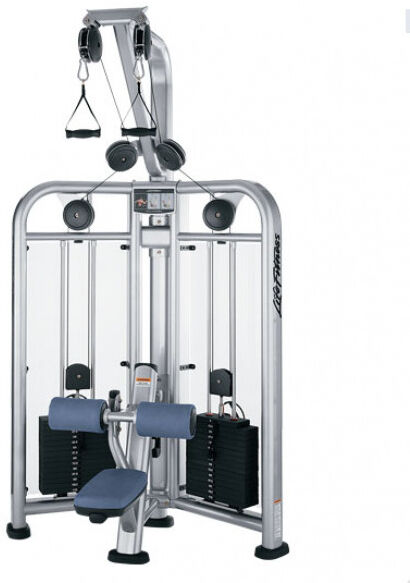
Life Fitness Life CMPD C/Motion PulldownCable Motionâ„¢ Technology from Life Fitness. It's multi-dimensional strength training. It's user-defined paths of motion that allow for an endless variety of exercises that build balance, stability, and power. It's infinite training choices - single stations, multi-use and multi-jungles. Turn...6768,00 £*Shipping: 0,00 £Secure redirect to the provider
-
How does our life depend on mobility?
Our life depends on mobility in various ways. From commuting to work, traveling for leisure, accessing essential services, and transporting goods, mobility plays a crucial role in our daily lives. It enables us to connect with people, explore new opportunities, and access resources that contribute to our well-being. Additionally, mobility is essential for economic growth, as it facilitates trade and the movement of goods and services. Overall, mobility is a fundamental aspect of modern life that impacts our ability to work, socialize, and access essential resources. **
-
Can economic efficiency and productivity develop mutually?
Yes, economic efficiency and productivity can develop mutually. When businesses and industries become more efficient in their operations, they can produce more output with the same amount of input, leading to increased productivity. Similarly, when productivity increases, it can drive economic efficiency by reducing waste and improving resource allocation. Therefore, as businesses and industries focus on improving efficiency and productivity, they can reinforce and support each other's development. **
-
How can sustainability be implemented in everyday life?
Sustainability can be implemented in everyday life by making small changes in our daily habits and choices. This can include reducing waste by recycling and composting, conserving energy by turning off lights and unplugging electronics when not in use, using reusable products instead of single-use items, and supporting local and sustainable businesses. Additionally, making conscious decisions about transportation, such as walking, biking, or using public transportation, can also contribute to a more sustainable lifestyle. By being mindful of our actions and their impact on the environment, we can work towards a more sustainable future. **
-
What is the difference between efficiency and productivity?
Efficiency refers to how well resources are utilized to achieve a specific goal or output, while productivity measures the output or results generated from a specific amount of input or resources. Efficiency focuses on minimizing waste and maximizing output with the resources available, while productivity is a measure of how much output is produced relative to the input used. In essence, efficiency is about doing things right, while productivity is about doing the right things. **
Similar search terms for Life
-
Does increasing productivity lead to higher economic efficiency?
Yes, increasing productivity can lead to higher economic efficiency. When a company or economy can produce more output with the same input of resources, it can lead to lower production costs and higher profits. This can also lead to lower prices for consumers, which can increase overall economic welfare. Additionally, higher productivity can lead to increased competitiveness in the global market, which can further contribute to economic efficiency. **
-
What are the connections between efficiency and productivity?
Efficiency and productivity are closely connected in that efficiency refers to the ability to accomplish a task with minimal waste, effort, or cost, while productivity refers to the rate at which goods or services are produced. When a process or system is efficient, it can lead to increased productivity because it allows for more output to be generated with the same amount of input. Conversely, when productivity is high, it often indicates that the resources and processes are being used efficiently. Therefore, improving efficiency can lead to increased productivity, and vice versa, as they both contribute to the overall effectiveness of a business or organization. **
-
Is a life without technology possible?
Yes, a life without technology is possible, as there are still many people around the world who live without modern technological conveniences. These individuals may rely on traditional methods for communication, transportation, and daily tasks. While technology has greatly improved our lives in many ways, it is not a necessity for survival, and some people choose to live a simpler, technology-free lifestyle. **
-
What is the difference between productivity, efficiency, and profitability?
Productivity refers to the amount of output produced per unit of input, such as time or resources. Efficiency, on the other hand, focuses on how well resources are used to achieve a specific goal or output. Profitability, meanwhile, is a measure of how efficiently a company generates profit relative to its costs and expenses. In essence, productivity is about output per input, efficiency is about resource utilization, and profitability is about the bottom line of a business. **
* All prices are inclusive of VAT and, if applicable, plus shipping costs. The offer information is based on the details provided by the respective shop and is updated through automated processes. Real-time updates do not occur, so deviations can occur in individual cases. ** Note: Parts of this content were created by AI.