Buy myls.eu ?
We are moving the project
myls.eu .
Are you interested in purchasing the domain
myls.eu ?
domain@kv-gmbh.de · 0541-91531010
Buy myls.eu ?
What is the difference between a 400 micron and a 500 micron solar pool cover?
The main difference between a 400 micron and a 500 micron solar pool cover is the thickness of the material. A 500 micron cover is thicker and therefore provides better insulation and heat retention for the pool. It also tends to be more durable and longer-lasting compared to a 400 micron cover. However, a 400 micron cover may be more affordable and easier to handle due to its lighter weight. Ultimately, the choice between the two will depend on the specific needs and preferences of the pool owner. **
Can economic efficiency and productivity develop mutually?
Yes, economic efficiency and productivity can develop mutually. When businesses and industries become more efficient in their operations, they can produce more output with the same amount of input, leading to increased productivity. Similarly, when productivity increases, it can drive economic efficiency by reducing waste and improving resource allocation. Therefore, as businesses and industries focus on improving efficiency and productivity, they can reinforce and support each other's development. **
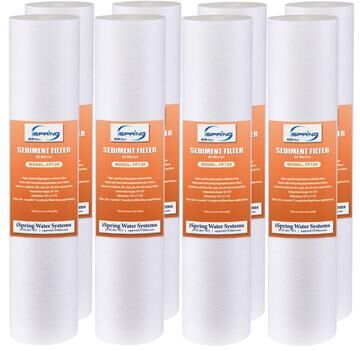

Similar search terms for ISpring-FP120X8-20-Micron
Top-Angebote
Products related to ISpring-FP120X8-20-Micron:
-
iSpring FP120X4 20 Micron Sediment Cartridges, 4-PackTested by independent third-party to meet NSF/ANSI standard. This filter can also be used for pool and hottub. Made of 100% Melt-blown polypropylene, multi-layer filtration Fits standard 10 inch housings, including name brand models20,19 $*Shipping: 0,00 $Secure redirect to the provider
-
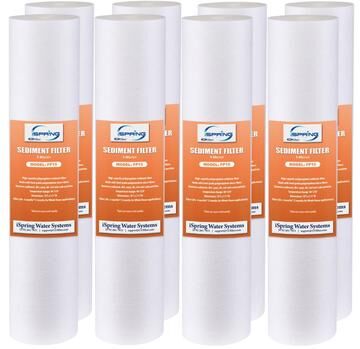
"iSpring FP25BX4 20"" 5 Micron Sediment Cartridges, 4-Pack"Protect Your Family and Household Appliance from Sediments: The FP25B sediment filters are specially designed to remove sediments, dust, sand, large particles, silt, dirt, and rust from water.136,99 $*Shipping: 0,00 $Secure redirect to the provider


-
How will technology look in 20 years?
In 20 years, technology is likely to be even more integrated into our daily lives, with advancements in artificial intelligence, virtual reality, and augmented reality. We can expect to see more seamless connectivity between devices, as well as increased automation in various industries. There may also be significant progress in fields such as biotechnology and quantum computing, leading to breakthroughs in healthcare and data processing. Overall, technology in 20 years is likely to be more advanced, efficient, and pervasive than it is today. **
-
What is the difference between efficiency and productivity?
Efficiency refers to how well resources are utilized to achieve a specific goal or output, while productivity measures the output or results generated from a specific amount of input or resources. Efficiency focuses on minimizing waste and maximizing output with the resources available, while productivity is a measure of how much output is produced relative to the input used. In essence, efficiency is about doing things right, while productivity is about doing the right things. **
-
Does increasing productivity lead to higher economic efficiency?
Yes, increasing productivity can lead to higher economic efficiency. When a company or economy can produce more output with the same input of resources, it can lead to lower production costs and higher profits. This can also lead to lower prices for consumers, which can increase overall economic welfare. Additionally, higher productivity can lead to increased competitiveness in the global market, which can further contribute to economic efficiency. **
-
What are the connections between efficiency and productivity?
Efficiency and productivity are closely connected in that efficiency refers to the ability to accomplish a task with minimal waste, effort, or cost, while productivity refers to the rate at which goods or services are produced. When a process or system is efficient, it can lead to increased productivity because it allows for more output to be generated with the same amount of input. Conversely, when productivity is high, it often indicates that the resources and processes are being used efficiently. Therefore, improving efficiency can lead to increased productivity, and vice versa, as they both contribute to the overall effectiveness of a business or organization. **

What is the difference between productivity, efficiency, and profitability?
Productivity refers to the amount of output produced per unit of input, such as time or resources. Efficiency, on the other hand, focuses on how well resources are used to achieve a specific goal or output. Profitability, meanwhile, is a measure of how efficiently a company generates profit relative to its costs and expenses. In essence, productivity is about output per input, efficiency is about resource utilization, and profitability is about the bottom line of a business. **
What is the relationship between productivity and economic efficiency?
Productivity and economic efficiency are closely related concepts. Productivity refers to the amount of output produced per unit of input, such as labor or capital. When productivity increases, more output is produced with the same amount of input, leading to greater economic efficiency. Economic efficiency, on the other hand, refers to the optimal allocation of resources to maximize output and minimize waste. Therefore, higher productivity often leads to greater economic efficiency as resources are used more effectively to produce goods and services. Conversely, lower productivity can lead to inefficiencies in resource allocation and reduced overall economic efficiency. **
Top-Angebote
Products related to ISpring-FP120X8-20-Micron:
-
"iSpring FP220BX2 20"" 20 Micron Sediment Cartridges, 2-Pack"Protect Your Family and Household Appliance from Large Sediments: The FP220B sediment filters are specially designed to remove large sediments, dust, sand, large particles, silt, dirt, and rust from water.79,99 $*Shipping: 0,00 $Secure redirect to the provider
-
iSpring FP120X4 20 Micron Sediment Cartridges, 4-PackTested by independent third-party to meet NSF/ANSI standard. This filter can also be used for pool and hottub. Made of 100% Melt-blown polypropylene, multi-layer filtration Fits standard 10 inch housings, including name brand models20,19 $*Shipping: 0,00 $Secure redirect to the provider
-
"iSpring FP25BX4 20"" 5 Micron Sediment Cartridges, 4-Pack"Protect Your Family and Household Appliance from Sediments: The FP25B sediment filters are specially designed to remove sediments, dust, sand, large particles, silt, dirt, and rust from water.136,99 $*Shipping: 0,00 $Secure redirect to the provider
-
What is the difference between a 400 micron and a 500 micron solar pool cover?
The main difference between a 400 micron and a 500 micron solar pool cover is the thickness of the material. A 500 micron cover is thicker and therefore provides better insulation and heat retention for the pool. It also tends to be more durable and longer-lasting compared to a 400 micron cover. However, a 400 micron cover may be more affordable and easier to handle due to its lighter weight. Ultimately, the choice between the two will depend on the specific needs and preferences of the pool owner. **
-
Can economic efficiency and productivity develop mutually?
Yes, economic efficiency and productivity can develop mutually. When businesses and industries become more efficient in their operations, they can produce more output with the same amount of input, leading to increased productivity. Similarly, when productivity increases, it can drive economic efficiency by reducing waste and improving resource allocation. Therefore, as businesses and industries focus on improving efficiency and productivity, they can reinforce and support each other's development. **
-
How will technology look in 20 years?
In 20 years, technology is likely to be even more integrated into our daily lives, with advancements in artificial intelligence, virtual reality, and augmented reality. We can expect to see more seamless connectivity between devices, as well as increased automation in various industries. There may also be significant progress in fields such as biotechnology and quantum computing, leading to breakthroughs in healthcare and data processing. Overall, technology in 20 years is likely to be more advanced, efficient, and pervasive than it is today. **
-
What is the difference between efficiency and productivity?
Efficiency refers to how well resources are utilized to achieve a specific goal or output, while productivity measures the output or results generated from a specific amount of input or resources. Efficiency focuses on minimizing waste and maximizing output with the resources available, while productivity is a measure of how much output is produced relative to the input used. In essence, efficiency is about doing things right, while productivity is about doing the right things. **
Similar search terms for ISpring-FP120X8-20-Micron
-
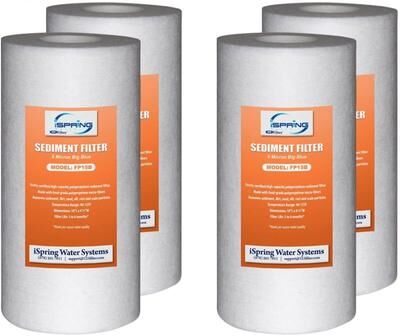
iSpring FP15BX4 5 Micron Sediment Cartridges, 4-Pack[Premium Quality Material] Complies strictly with FDA standard (CFR-Part 177) and tested by independent third party against NSF/ANSI standard((NSF/ANSI 42) for material safety and water quality.48,37 $*Shipping: 0,00 $Secure redirect to the provider
-
iSpring FP25X4 5 Micron Sediment Cartridges, 4-PackProtect Your Family and Household Appliance from Sediments: The FP25 sediment filters are specially designed to remove sediments, dust, sand, large particles, silt, dirt, and rust from water.34,99 $*Shipping: 0,00 $Secure redirect to the provider
-
Does increasing productivity lead to higher economic efficiency?
Yes, increasing productivity can lead to higher economic efficiency. When a company or economy can produce more output with the same input of resources, it can lead to lower production costs and higher profits. This can also lead to lower prices for consumers, which can increase overall economic welfare. Additionally, higher productivity can lead to increased competitiveness in the global market, which can further contribute to economic efficiency. **
-
What are the connections between efficiency and productivity?
Efficiency and productivity are closely connected in that efficiency refers to the ability to accomplish a task with minimal waste, effort, or cost, while productivity refers to the rate at which goods or services are produced. When a process or system is efficient, it can lead to increased productivity because it allows for more output to be generated with the same amount of input. Conversely, when productivity is high, it often indicates that the resources and processes are being used efficiently. Therefore, improving efficiency can lead to increased productivity, and vice versa, as they both contribute to the overall effectiveness of a business or organization. **
-
What is the difference between productivity, efficiency, and profitability?
Productivity refers to the amount of output produced per unit of input, such as time or resources. Efficiency, on the other hand, focuses on how well resources are used to achieve a specific goal or output. Profitability, meanwhile, is a measure of how efficiently a company generates profit relative to its costs and expenses. In essence, productivity is about output per input, efficiency is about resource utilization, and profitability is about the bottom line of a business. **
-
What is the relationship between productivity and economic efficiency?
Productivity and economic efficiency are closely related concepts. Productivity refers to the amount of output produced per unit of input, such as labor or capital. When productivity increases, more output is produced with the same amount of input, leading to greater economic efficiency. Economic efficiency, on the other hand, refers to the optimal allocation of resources to maximize output and minimize waste. Therefore, higher productivity often leads to greater economic efficiency as resources are used more effectively to produce goods and services. Conversely, lower productivity can lead to inefficiencies in resource allocation and reduced overall economic efficiency. **
* All prices are inclusive of VAT and, if applicable, plus shipping costs. The offer information is based on the details provided by the respective shop and is updated through automated processes. Real-time updates do not occur, so deviations can occur in individual cases. ** Note: Parts of this content were created by AI.