Buy myls.eu ?
We are moving the project
myls.eu .
Are you interested in purchasing the domain
myls.eu ?
domain@kv-gmbh.de · 0541-91531010
Buy myls.eu ?
Can economic efficiency and productivity develop mutually?
Yes, economic efficiency and productivity can develop mutually. When businesses and industries become more efficient in their operations, they can produce more output with the same amount of input, leading to increased productivity. Similarly, when productivity increases, it can drive economic efficiency by reducing waste and improving resource allocation. Therefore, as businesses and industries focus on improving efficiency and productivity, they can reinforce and support each other's development. **
Are microjobs commercial?
Yes, microjobs are commercial in nature. They involve the exchange of goods or services for payment, which is a fundamental aspect of commercial activity. Whether it's completing small tasks, providing services, or selling products, microjobs are part of the commercial economy and contribute to the overall marketplace. Additionally, many microjob platforms are operated by commercial entities that facilitate the transactions between individuals or businesses. **

Similar search terms for ISpring-RCB3P-Light-Commercial
Top-Angebote
Products related to ISpring-RCB3P-Light-Commercial:
-
iSpring MC3 300 GPD Commercial Reverse Osmosis Membrane"300GPD Commercial Reverse Osmosis Membrane, tested by independent third-party to meet NSF/ANSI Standard TFC (Thin Film Composite) membrane Rejects wide spectrum of impurities down to . 0001 micron Fits commercial membrane housing that uses 2. 8""x12""…"169,73 $*Shipping: 0,00 $Secure redirect to the provider
-
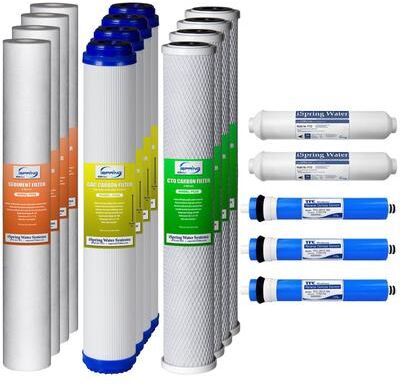
iSpring F17RCB3P 5-Stage Commercial RO 2-Year Supply"2- Year Supply filter replacement pack for iSpring RCB3 17 Pieces included: FP25X4; FG25X4; FC25X4; MC1X3; FT15X2 Individually wrapped to keep freshness Fits standard 20"" housings, including brand name models The upgraded post-filters come with quick…"359,99 $*Shipping: 0,00 $Secure redirect to the provider
-
iSpring F7RB 5-Stage Commercial RO 1-Year Supply"1-Year supply of replacement water filters for 5-Stage 20"" Commercial RO system(RCB3P) 7 Pieces included: FP25X2, FG25X2, FC25X2, FT15X1 Fits standard 20"" housings, including brand name models Individually sealed to keep freshness The upgraded…"133,49 $*Shipping: 0,00 $Secure redirect to the provider
-
Uplift Picks Solar Street Light For Commercial Parking Lots Security And Outdoor Illumination Solar Street Light For Commercial Parking Lots Security And Outdoor IlluminationKeep large outdoor areas visible after sunset without relying on wired electricity. This solar street light uses an 8000mAh battery to support dependable outdoor illumination. Designed as a commercial solar light, it is well suited to spaces where...535,00 $*Shipping: 0,00 $Secure redirect to the provider



-
What is the difference between efficiency and productivity?
Efficiency refers to how well resources are utilized to achieve a specific goal or output, while productivity measures the output or results generated from a specific amount of input or resources. Efficiency focuses on minimizing waste and maximizing output with the resources available, while productivity is a measure of how much output is produced relative to the input used. In essence, efficiency is about doing things right, while productivity is about doing the right things. **
-
Does increasing productivity lead to higher economic efficiency?
Yes, increasing productivity can lead to higher economic efficiency. When a company or economy can produce more output with the same input of resources, it can lead to lower production costs and higher profits. This can also lead to lower prices for consumers, which can increase overall economic welfare. Additionally, higher productivity can lead to increased competitiveness in the global market, which can further contribute to economic efficiency. **
-
What are the connections between efficiency and productivity?
Efficiency and productivity are closely connected in that efficiency refers to the ability to accomplish a task with minimal waste, effort, or cost, while productivity refers to the rate at which goods or services are produced. When a process or system is efficient, it can lead to increased productivity because it allows for more output to be generated with the same amount of input. Conversely, when productivity is high, it often indicates that the resources and processes are being used efficiently. Therefore, improving efficiency can lead to increased productivity, and vice versa, as they both contribute to the overall effectiveness of a business or organization. **
-
How do you compare a commercial traveler to a commercial agent?
A commercial traveler is an individual who travels to different locations to sell goods or services on behalf of a company, often working on a commission basis. On the other hand, a commercial agent is a representative who acts on behalf of a company to negotiate and facilitate business transactions with clients or customers. While both roles involve promoting and selling products or services, a commercial agent typically has a more formal relationship with the company they represent and may have a broader range of responsibilities beyond just sales. **

What is the difference between productivity, efficiency, and profitability?
Productivity refers to the amount of output produced per unit of input, such as time or resources. Efficiency, on the other hand, focuses on how well resources are used to achieve a specific goal or output. Profitability, meanwhile, is a measure of how efficiently a company generates profit relative to its costs and expenses. In essence, productivity is about output per input, efficiency is about resource utilization, and profitability is about the bottom line of a business. **
What is the relationship between productivity and economic efficiency?
Productivity and economic efficiency are closely related concepts. Productivity refers to the amount of output produced per unit of input, such as labor or capital. When productivity increases, more output is produced with the same amount of input, leading to greater economic efficiency. Economic efficiency, on the other hand, refers to the optimal allocation of resources to maximize output and minimize waste. Therefore, higher productivity often leads to greater economic efficiency as resources are used more effectively to produce goods and services. Conversely, lower productivity can lead to inefficiencies in resource allocation and reduced overall economic efficiency. **
Top-Angebote
Products related to ISpring-RCB3P-Light-Commercial:
-
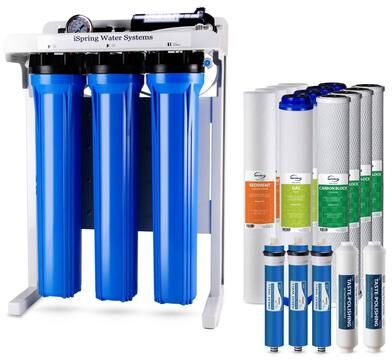
iSpring RCB3P Light Commercial Tankless Reverse Osmosis Water Filtration System, Removes up to 99% contaminant, Extra Filter SetPowerful RO Water Filtration System – This high-capacity reverse osmosis system removes up to 99% of over 1,000 contaminants and hardness, including PFAS (PFOA and PFOS), lead (up to 98%), chlorine, fluoride, arsenic, asbestos, calcium, sodium, and...957,17 $*Shipping: 0,00 $Secure redirect to the provider
-
iSpring F7RBY2 Replacement Filter Pack for RCB3P RO SystemComplete 2nd Year Filter Pack for RCB3P: It includes a sediment filter (FP25), a GAC carbon filter (FG25), a CTO carbon filter (FC25), three 100 GPD RO membranes (MC1), and one post carbon filter (FT15).154,49 $*Shipping: 0,00 $Secure redirect to the provider
-
iSpring MC3 300 GPD Commercial Reverse Osmosis Membrane"300GPD Commercial Reverse Osmosis Membrane, tested by independent third-party to meet NSF/ANSI Standard TFC (Thin Film Composite) membrane Rejects wide spectrum of impurities down to . 0001 micron Fits commercial membrane housing that uses 2. 8""x12""…"169,73 $*Shipping: 0,00 $Secure redirect to the provider
-
iSpring F17RCB3P 5-Stage Commercial RO 2-Year Supply"2- Year Supply filter replacement pack for iSpring RCB3 17 Pieces included: FP25X4; FG25X4; FC25X4; MC1X3; FT15X2 Individually wrapped to keep freshness Fits standard 20"" housings, including brand name models The upgraded post-filters come with quick…"359,99 $*Shipping: 0,00 $Secure redirect to the provider
-
Can economic efficiency and productivity develop mutually?
Yes, economic efficiency and productivity can develop mutually. When businesses and industries become more efficient in their operations, they can produce more output with the same amount of input, leading to increased productivity. Similarly, when productivity increases, it can drive economic efficiency by reducing waste and improving resource allocation. Therefore, as businesses and industries focus on improving efficiency and productivity, they can reinforce and support each other's development. **
-
Are microjobs commercial?
Yes, microjobs are commercial in nature. They involve the exchange of goods or services for payment, which is a fundamental aspect of commercial activity. Whether it's completing small tasks, providing services, or selling products, microjobs are part of the commercial economy and contribute to the overall marketplace. Additionally, many microjob platforms are operated by commercial entities that facilitate the transactions between individuals or businesses. **
-
What is the difference between efficiency and productivity?
Efficiency refers to how well resources are utilized to achieve a specific goal or output, while productivity measures the output or results generated from a specific amount of input or resources. Efficiency focuses on minimizing waste and maximizing output with the resources available, while productivity is a measure of how much output is produced relative to the input used. In essence, efficiency is about doing things right, while productivity is about doing the right things. **
-
Does increasing productivity lead to higher economic efficiency?
Yes, increasing productivity can lead to higher economic efficiency. When a company or economy can produce more output with the same input of resources, it can lead to lower production costs and higher profits. This can also lead to lower prices for consumers, which can increase overall economic welfare. Additionally, higher productivity can lead to increased competitiveness in the global market, which can further contribute to economic efficiency. **
Similar search terms for ISpring-RCB3P-Light-Commercial
-
iSpring F7RB 5-Stage Commercial RO 1-Year Supply"1-Year supply of replacement water filters for 5-Stage 20"" Commercial RO system(RCB3P) 7 Pieces included: FP25X2, FG25X2, FC25X2, FT15X1 Fits standard 20"" housings, including brand name models Individually sealed to keep freshness The upgraded…"133,49 $*Shipping: 0,00 $Secure redirect to the provider
-
Uplift Picks Solar Street Light For Commercial Parking Lots Security And Outdoor Illumination Solar Street Light For Commercial Parking Lots Security And Outdoor IlluminationKeep large outdoor areas visible after sunset without relying on wired electricity. This solar street light uses an 8000mAh battery to support dependable outdoor illumination. Designed as a commercial solar light, it is well suited to spaces where...535,00 $*Shipping: 0,00 $Secure redirect to the provider
-
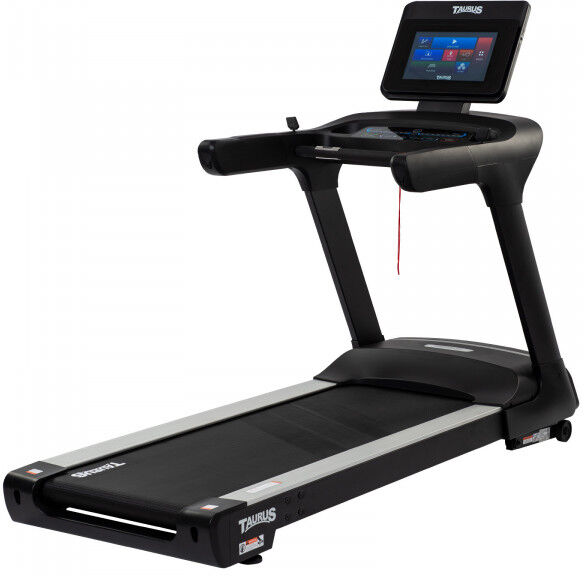
Taurus T9.9 Light Commercial TreadmillThe Taurus T9.9 Light Commercial Treadmill pairs a strong 3.5HP motor with a roomy deck and a 10 or 15.6 inch touchscreen full of training options, routes and streaming apps. Speed and incline shift quickly, and the cushioning adds a bit of give to each footstrike to keep the run feeling smooth....2249,10 £*Shipping: 0,00 £Secure redirect to the provider
-
What are the connections between efficiency and productivity?
Efficiency and productivity are closely connected in that efficiency refers to the ability to accomplish a task with minimal waste, effort, or cost, while productivity refers to the rate at which goods or services are produced. When a process or system is efficient, it can lead to increased productivity because it allows for more output to be generated with the same amount of input. Conversely, when productivity is high, it often indicates that the resources and processes are being used efficiently. Therefore, improving efficiency can lead to increased productivity, and vice versa, as they both contribute to the overall effectiveness of a business or organization. **
-
How do you compare a commercial traveler to a commercial agent?
A commercial traveler is an individual who travels to different locations to sell goods or services on behalf of a company, often working on a commission basis. On the other hand, a commercial agent is a representative who acts on behalf of a company to negotiate and facilitate business transactions with clients or customers. While both roles involve promoting and selling products or services, a commercial agent typically has a more formal relationship with the company they represent and may have a broader range of responsibilities beyond just sales. **
-
What is the difference between productivity, efficiency, and profitability?
Productivity refers to the amount of output produced per unit of input, such as time or resources. Efficiency, on the other hand, focuses on how well resources are used to achieve a specific goal or output. Profitability, meanwhile, is a measure of how efficiently a company generates profit relative to its costs and expenses. In essence, productivity is about output per input, efficiency is about resource utilization, and profitability is about the bottom line of a business. **
-
What is the relationship between productivity and economic efficiency?
Productivity and economic efficiency are closely related concepts. Productivity refers to the amount of output produced per unit of input, such as labor or capital. When productivity increases, more output is produced with the same amount of input, leading to greater economic efficiency. Economic efficiency, on the other hand, refers to the optimal allocation of resources to maximize output and minimize waste. Therefore, higher productivity often leads to greater economic efficiency as resources are used more effectively to produce goods and services. Conversely, lower productivity can lead to inefficiencies in resource allocation and reduced overall economic efficiency. **
* All prices are inclusive of VAT and, if applicable, plus shipping costs. The offer information is based on the details provided by the respective shop and is updated through automated processes. Real-time updates do not occur, so deviations can occur in individual cases. ** Note: Parts of this content were created by AI.